Shopping cart
- +1 564-544-6614
- [email protected]
- 24/7 Available


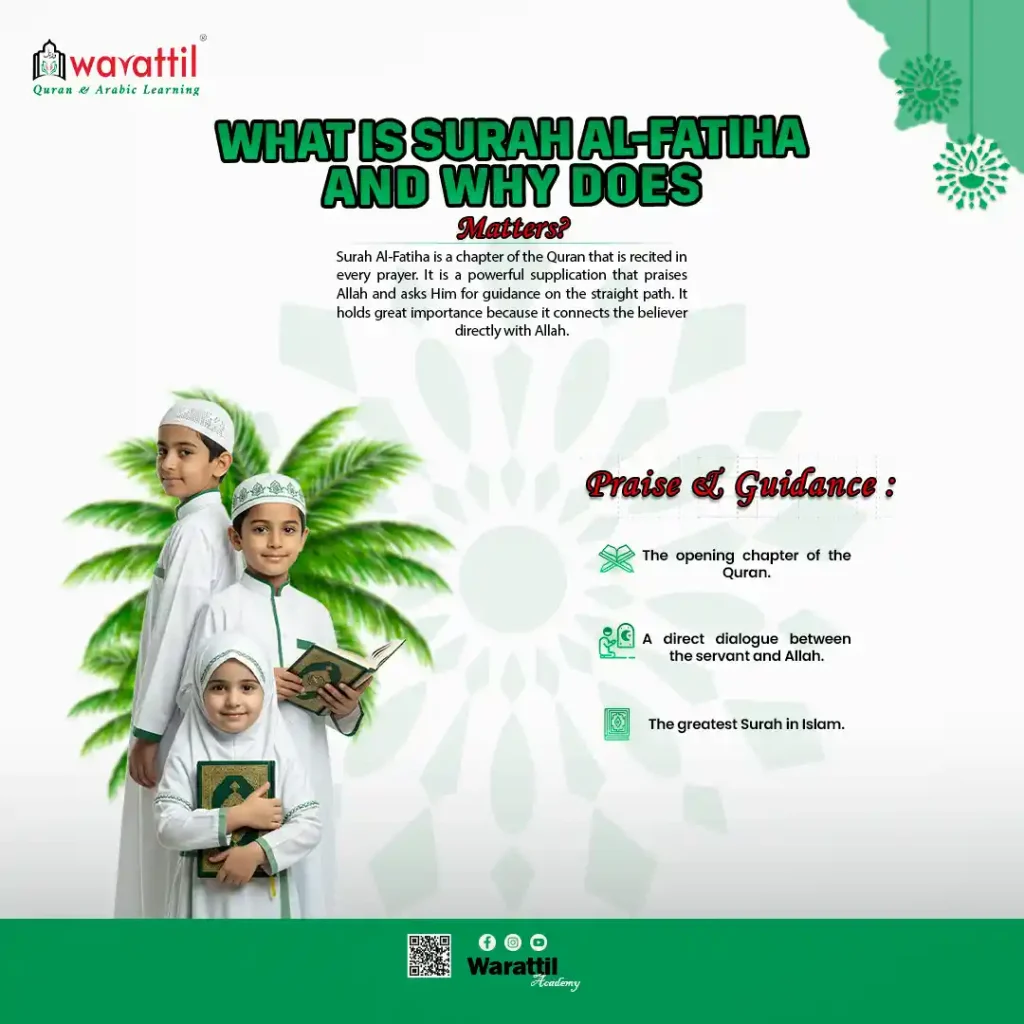
If there is one chapter in the Quran that holds a special place in the heart of every Muslim, it is the opening chapter, Al-Fatiha. We recite it in every unit of our daily prayers, yet we often rush through it without pausing to reflect on its depth. The benefits of Surah Al-Fatiha extend far beyond ritual recitation; they encompass spiritual elevation, physical healing, and a profound sense of direction. This chapter is often called the “Mother of the Book,” and for good reason. It serves as a complete summary of the Islamic faith, establishing a direct connection between the servant and their Creator. Let’s take a deep dive into why this chapter is so essential and how you can unlock its immense treasures.
Surah Al-Fatiha is the first chapter of the Holy Quran, consisting of seven verses. It was revealed in Mecca, and it holds a unique status in Islamic tradition. The Prophet Muhammad (peace be upon him) described it as the greatest chapter in the Quran. Its name literally translates to “The Opening,” signifying that it opens the Quran and serves as the gateway to understanding the rest of the divine message.
What makes it matter so deeply is the relationship it establishes. It is the only chapter where the reciter engages in a direct dialogue with Allah. When a servant recites “All praise is due to Allah,” Allah responds, “My servant has praised Me.” When the servant says, “You alone we worship,” Allah replies, “This is between Me and My servant.” This interactive nature highlights why the benefits of Surah Al-Fatiha are not just blessings for the soul but a direct line of communication with the Divine.
The spiritual dimension of this chapter is vast. Primarily, it is a prayer for guidance. By reciting it, you are acknowledging that you are in constant need of direction. The spiritual benefits of Surah Al-Fatiha include the purification of the heart from arrogance, as you begin by praising Allah and acknowledging His sovereignty.
It also solidifies the concept of Tawheed (monotheism). By declaring “You alone we worship,” you reaffirm your commitment to sincerity, cleansing your intentions from showing off or seeking the approval of others. For a believer, this surah acts as a spiritual anchor; it keeps the soul grounded, reminding us that our purpose is to worship and that our ultimate goal is to seek help from Him alone.
One of the most well-documented benefits of Surah Al-Fatiha is its role in physical and spiritual healing. It is widely known as the Ruqyah (spiritual remedy). There is a famous hadith where a group of the Prophet’s companions came across a chief who had been stung by a scorpion. One of them recited Surah Al-Fatiha over him, and the man was healed as if he were released from a bond. The Prophet (peace be upon him) later confirmed that this act was valid, and he asked, “What made you know it was a Ruqyah?”
Because of this, the surah is recited over the sick to ease pain, cure illnesses, and remove spiritual afflictions such as the evil eye. It works on the principle that the Quran is a healing for what is in the chests. The seven verses act as a cure that addresses the root of ailments—often connecting physical sickness to a lack of spiritual balance.
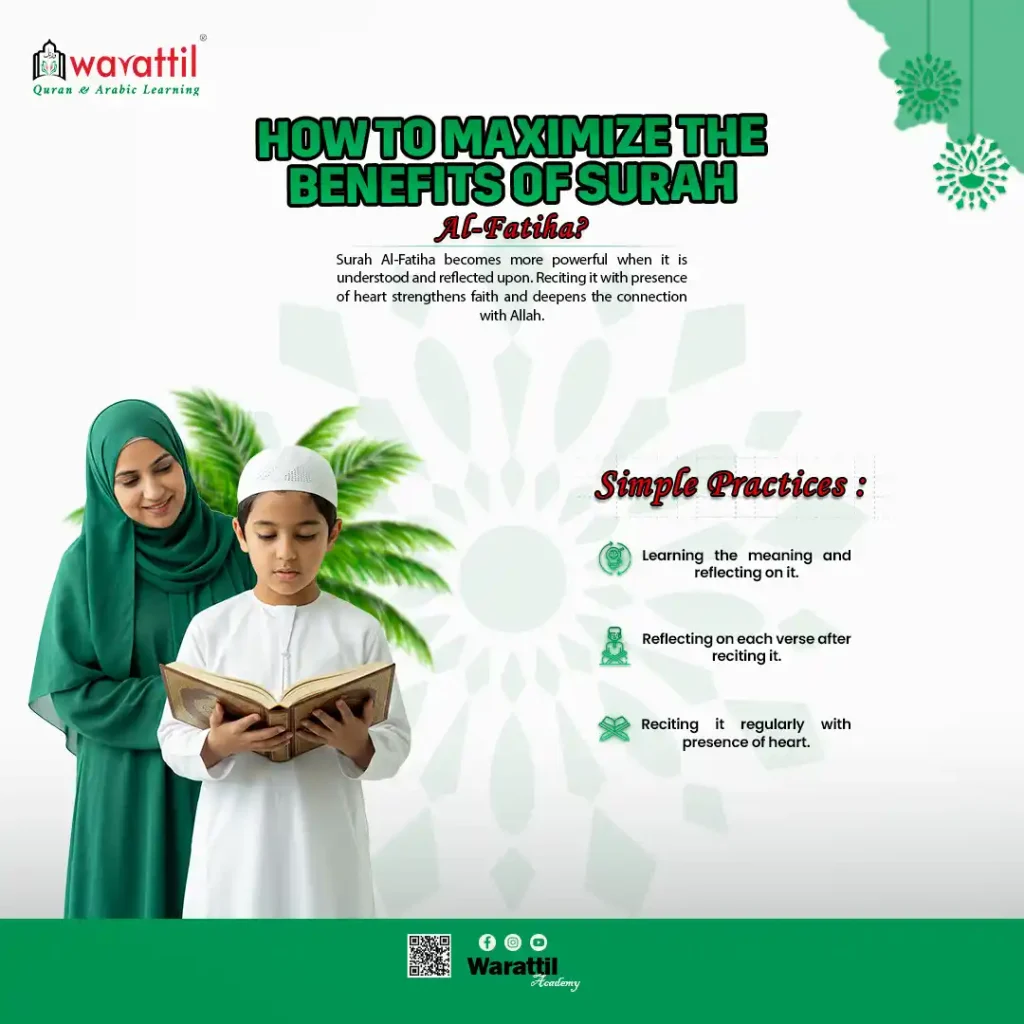
You cannot separate the benefits of Surah Al-Fatiha from the five daily prayers. In fact, the prayer (Salah) is not considered valid without the recitation of this chapter. This mandatory status tells us something crucial: if we want our prayers to be accepted and our connection to be strong, we must master this surah.
In Salah, it serves as a reminder of the covenant between you and Allah. It breaks down your prayer into a conversation. When you stand on the prayer mat, you aren’t just reciting Arabic words; you are stating your needs, praising your Lord, and asking for the straight path. This transforms the prayer from a mechanical habit into a mindful spiritual experience. Consistent recitation in Salah ensures that the themes of gratitude, reliance on God, and the plea for guidance are embedded into your daily consciousness.
One of the fascinating aspects of this chapter is the number of names it has been given by Islamic scholars and the Prophet himself. Each name highlights a different facet of its importance. Here is a table summarizing the seven primary names:
| Name | Meaning | Significance |
| Al-Fatiha | The Opening | It serves as the opening of the Quran and the commencement of every prayer. |
| Umm Al-Kitab | The Mother of the Book | It contains the core summary and essence of the entire Quranic message. |
| Al-Sab’ al-Mathani | The Seven Oft-Repeated Verses | Refers to the seven verses recited repeatedly in every rak’ah of prayer. |
| Al-Hamd | The Praise | It begins with Alhamdulillah, centering the believer on gratitude and praise to Allah. |
| Al-Shifa’ | The Cure | Highlights its spiritual and physical healing properties for the believer. |
| Al-Ruqyah | The Spiritual Remedy | Traditionally used as a prayer for protection against afflictions like the evil eye. |
| Asas Al-Quran | The Foundation of the Quran | It acts as the fundamental base upon which the rest of the Quranic revelation stands. |
When you look at the core request in Surah Al-Fatiha—”Guide us to the straight path”—you realize that the benefits of Surah Al-Fatiha revolve heavily around protection. The “straight path” is the path that avoids deviation. By asking for this guidance daily, you are actively seeking protection from misguidance, from the traps of worldly distractions, and from the influence of those who have earned anger or gone astray.
It acts as a shield. When you internalize the meaning, you become more aware of the choices you make throughout the day. Are your actions leading you to the path of those who are blessed, or are they leading you toward heedlessness? The surah provides a compass for moral decision-making, ensuring that you have a clear benchmark to measure your actions against.
Modern life is filled with stress, overthinking, and anxiety. One of the most overlooked benefits of Surah Al-Fatiha is its ability to calm the anxious heart. The surah is structured to take your mind off your problems and redirect it toward the Creator.
The first half focuses entirely on Allah’s attributes His mercy, His sovereignty, and His role as the Master of the Day of Judgment. By acknowledging His power, you put your own problems into perspective. If Allah is the Most Merciful and the Master of the universe, then your current worry is within His control. The second half is a supplication asking for help and guidance. This structure naturally alleviates anxiety because it shifts the burden from your shoulders to the One who can actually handle it. Reciting it with contemplation can bring an immediate sense of relief and trust (Tawakkul).
To truly unlock the benefits of Surah Al-Fatiha, it isn’t enough to just recite it; you must engage with it. Here are six practical steps to deepen your connection with this chapter:
In conclusion, the benefits of Surah Al-Fatiha are not just a list of rewards; they are a complete system for spiritual survival. It heals the body, guides the soul, protects the heart, and anchors the mind. By treating this chapter not just as a recitation but as a conversation with Allah, you transform your entire spiritual experience. Start today by slowing down in your next prayer, and let the opening chapter open the doors of mercy, peace, and guidance in your life.

My son feels happy, amazing teachers and staff in wrattil and flexible prices MashaAllah Thank you so much
My daughter started learning in warattil academy and alhamdulilah we are really impressed and have enjoyed learning with wrattil. May Allah reward her sheikh
My teacher Ahmed is very good. He helped me recite and memorize holy Quran
Warattil is the most efficient way of learning Arabic. I like warattil curriculum and excellent teachers to support this learning Thank you so much
I highly recommend warattil Ijazah programs to anyone who wants to learn Quran properly.
Very well organized MashaAllah. I love it and this is a great course if you want to understand the Quran and learn tafsir
Warattil program is the best I have seen. The teacher is really great and is available to answer questions in a clear manner
I think warattil is the best academy in learning Arabic and I recommend Arabic course to anyone
We are so happy with ustad Hussein. He is very patient and comfortable teacher. May Allah the teachers and admin in warattil
Rating 10 mashaAllah and so grateful