Shopping cart
- +1 564-544-6614
- [email protected]
- 24/7 Available


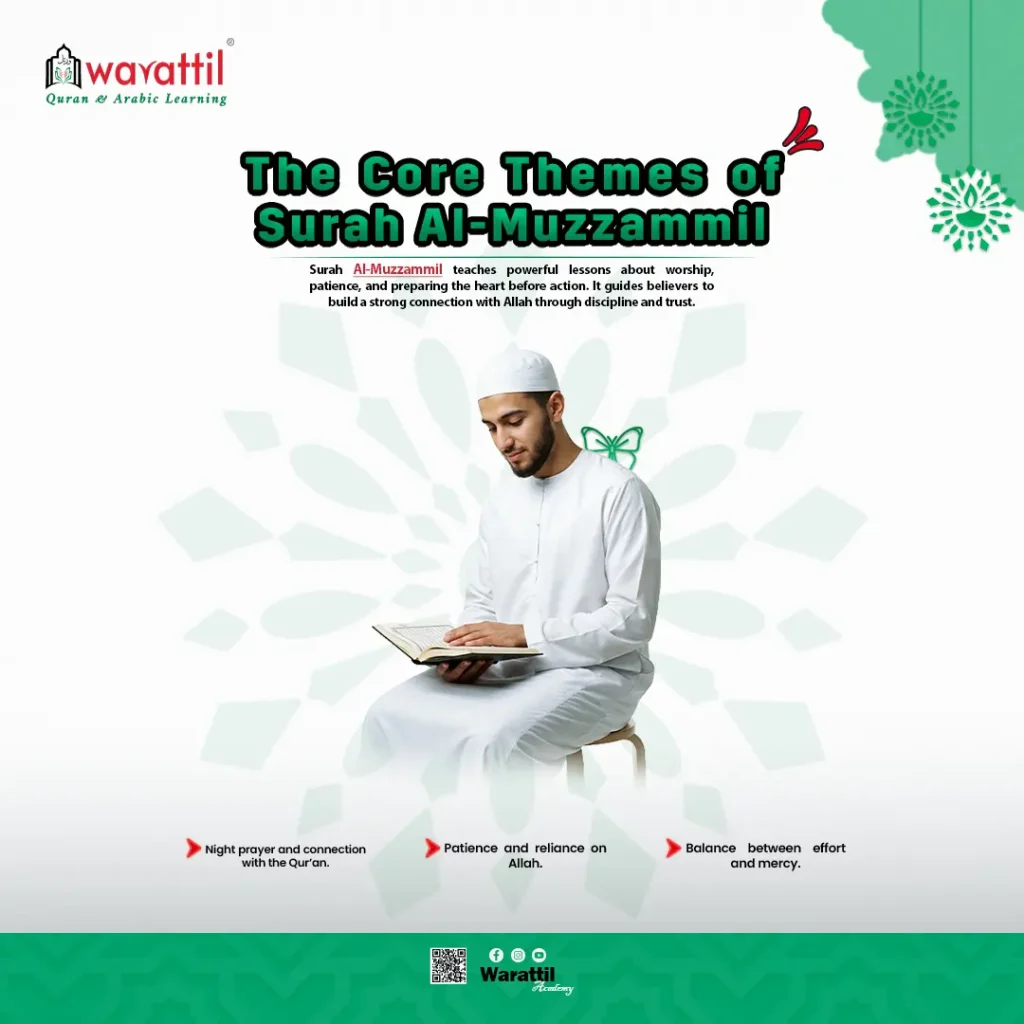
When most people think of the Quran’s early chapters, they picture short, powerful verses revealed during the most difficult phase of the Prophet’s mission. Surah Al Muzzammil is exactly that and far more. Understanding the benefits of Surah Al Muzzammil goes beyond a simple list of rewards. It demands that we sit with its verses, feel their weight, and ask: what is Allah actually asking of us here? This article explores that question seriously, drawing on classical scholarship, the surah’s historical context, and its living relevance for Muslims today.
Surah Al-Muzzammil is the 73rd chapter of the Holy Qur’an, consisting of 20 verses. It was primarily revealed during the early Meccan period of Islam, although its final verse is widely believed to have been revealed later in Madinah.
The word “Al-Muzzammil” (المزمل) comes from an Arabic root meaning “one who is wrapped in a garment.” This refers to the state of Prophet Muhammad (ﷺ), who, after receiving the early revelations, was overwhelmed and wrapped himself in his cloak seeking comfort.
In this surah, Allah addresses him with the words: “O you who wraps himself [in clothing]…” a deeply intimate yet powerful call. It was not merely a gentle address, but a command to rise, prepare, and embrace the immense responsibility of prophethood. In many ways, this surah served as a spiritual and practical training ground for the mission ahead.
According to the tafsir of Ibn Kathir, the command to perform night prayer (Qiyam al-Layl) in the early verses was initially obligatory for the Prophet (ﷺ) and his companions for about a year. This obligation was later eased in the final verse, highlighting both the discipline required in the early stages of Islam and Allah’s mercy in gradually lightening the burden.

Surah Al-Muzzammil carries deep spiritual lessons that shaped the foundation of the early Muslim community. Its themes are timeless, offering guidance, strength, and discipline for every believer.
One of the central messages of the surah is the importance of standing in prayer during the night. Allah commands Prophet Muhammad (ﷺ) to rise in the quiet hours, when distractions are minimal and the connection with Allah is strongest. This teaches sincerity, discipline, and spiritual elevation.
The surah prepares the Prophet (ﷺ) for the immense responsibility of conveying the message of Islam. It emphasizes that inner strength must come before outward action—building patience, focus, and reliance on Allah.
Early Muslims faced strong rejection and hardship. This surah encourages patience (sabr) and trust in Allah’s plan, reminding believers that challenges are part of the journey of truth.
Reciting the Qur’an slowly and thoughtfully (tarteel) is another key theme. It’s not just about reading, but understanding, reflecting, and allowing its message to transform the heart.
Believers are reminded to place their complete trust in Allah. No matter the difficulty, true strength comes from reliance on Him alone.
While the early command for night prayer was strict, the final verse of the surah brings ease and flexibility. This highlights a beautiful balance Allah values effort but also understands human limitations.

Surah Al-Muzzammil is not just a message for the early Muslims—it speaks directly to the challenges of modern life. Its guidance can be applied in a world full of distractions, pressure, and constant noise.
Today’s life is fast and overwhelming. The command to stand in night prayer reminds us to disconnect from the noise and reconnect with Allah. Even a few quiet moments at night can bring clarity, peace, and emotional strength.
Modern culture often focuses on external achievements career, money, status. But this surah teaches that true success begins internally. Just as Prophet Muhammad (ﷺ) was spiritually prepared before his mission, we also need strong inner discipline before chasing outward goals.
Whether it’s social pressure, criticism, or personal struggles, this surah teaches patience and resilience. It reminds us not to compromise our values, even when it’s difficult.
We live in a time of endless scrolling and distraction. The instruction to recite the Qur’an with tarteel encourages slow, mindful engagement focusing deeply rather than consuming everything superficially.
Uncertainty is part of modern life—jobs, finances, future plans. This surah teaches tawakkul (reliance on Allah), reminding us that while we strive, ultimate control belongs to Him.
The easing of the night prayer obligation in the final verse shows that Islam is not about pushing yourself to exhaustion. It’s about consistency, balance, and sustainability—something especially important in today’s burnout culture.
Before listing its benefits, it helps to understand what Surah Al-Muzzammil is truly about at its core. Three major themes run through it like a continuous current: the night prayer (Qiyam-ul-Layl / Tahajjud), the measured recitation of the Qur’an (Tarteel), and patient reliance on Allah during hardship.
These are not incidental themes—they form the very architecture upon which the surah’s impact is built.
The emphasis on night prayer teaches deep spiritual discipline. In a world full of distractions, waking in the quiet hours creates a space for sincerity, reflection, and a stronger connection with Allah. It’s a practice that builds inner strength long before outward success.
The command to recite the Qur’an with tarteel highlights the importance of slowing down. Rather than rushing through words, the believer is taught to engage thoughtfully—allowing the meanings to settle into the heart and shape one’s character.
And finally, the call to patience and reliance (sabr and tawakkul) prepares a believer to face life’s challenges with stability and trust. Just as Prophet Muhammad (ﷺ) was guided to remain firm despite opposition, this surah reminds us that hardship is part of the journey and that true strength lies in trusting Allah through it.
Together, these themes create a powerful framework: connect deeply, reflect sincerely, and endure patiently. Everything else this surah offers flows from these foundations.
A note on authenticity
A widely circulated hadith that attributes specific rewards to the recitation of every individual surah — including Surah Al Muzzammil — has been classified as fabricated by hadith scholars, most notably Ibn Al-Jawzi. This is noted on Islam Q&A (IslamQA.info) and other scholarly sources. The benefits listed here are therefore grounded in the actual content of the surah, established Islamic principles, and verified scholarly commentary — not that narration.
The most direct and well-established benefit of engaging with Surah Al Muzzammil is what it leads you to do: stand in prayer at night. The surah opens with a direct command to establish Qiyam-ul-Layl — not as a burden, but as a means of spiritual fortification. Allah says in verse 6 that the night hours are when the soul is most collected and speech is clearest, pointing to the unique receptivity of the human heart during those quiet hours.
There is a well-known and authentic hadith recorded in Sahih Muslim and Sahih Bukhari in which the Prophet (ﷺ) said that during the last third of the night, Allah descends to the lowest heaven and calls out: “Who is asking so that I may give? Who is calling upon Me so that I may respond? Who is seeking forgiveness so that I may forgive?” This is the spiritual environment that Surah Al Muzzammil is pointing believers toward.
Verse 4 of the surah contains a command that is often overlooked: “And recite the Quran with measured recitation (tarteel).” This is not merely an instruction about pronunciation or tajweed though those matter. It is a call to slow down, to absorb, and to let the words of Allah land in the heart rather than rush past the tongue. Imam Ya’qub al-Karkhi noted that the opening verses of Surah Al Muzzammil describe stages of spiritual journeying that include deep preoccupation with the Quran and constant remembrance of Allah.
For a believer living in a world built on speed and distraction, this instruction carries real weight. The surah practically invites a different relationship with Quranic recitation entirely.
Verses 10 and 11 address the Prophet (ﷺ) during a time of intense opposition and personal hardship. Allah instructs him to “be patient over what they say” and to leave the deniers to Him. This is not passive resignation it is an active, conscious choice to hand the outcome to Allah while continuing to act with integrity. For anyone navigating loss, professional failure, family conflict, or simply the grinding difficulty of daily life, this portion of the surah speaks with remarkable clarity.
Many scholars and spiritual guides recommend this surah specifically for people struggling with anxiety or undergoing major life transitions, precisely because its verses normalise difficulty and redirect the believer toward Allah rather than toward despair.
One of the most overlooked yet profound aspects of Surah Al Muzzammil is how it ends. The final verse eases the initial rigorous command for night prayer, acknowledging that believers will be sick, travelling, or occupied with their responsibilities. Allah says: “Read of it what is easy for you.” This concession is not a loophole it is mercy embedded in law.
What this teaches is that Islamic worship is not about extremism or burnout. It is about sincerity, consistency, and proportion. A believer who internalises this surah is protected from two errors at once: religious rigidity on one side, and spiritual heedlessness on the other. That balance is itself one of the most valuable gifts this surah offers.
Night prayer was not just a command given to the Prophet (ﷺ) — it was the cornerstone of his entire spiritual life. By returning to Surah Al Muzzammil regularly and implementing its teachings, a believer enters, in a very real sense, the same spiritual training that shaped the Prophet’s character, his patience, and his closeness to Allah. This is not imitation for its own sake. It is following a proven path toward the same quality of inner life.
The final verse of the surah includes a reminder to establish prayer, give zakat, and lend to Allah a “goodly loan” that is, to spend in His cause with generosity. This grounds the surah’s spirituality in social responsibility. True closeness to Allah, the surah argues, is never merely personal. It flows outward into concern for others. The spiritual discipline built through night prayer finds its expression in charitable action by day.
The central teaching of Surah Al-Muzzammil is the instruction for night prayer (Tahajjud). This is not merely a recommendation; the surah’s opening verses frame it as an act of profound spiritual preparation.
Verses 73:1-6: “O you who wraps himself [in clothing], Arise [to pray] the night, except for a little – Half of it – or subtract from it a little. Or add to it, and recite the Qur’an with measured recitation… Indeed, the hours of the night are more effective for concurrence [of heart and tongue] and more suitable for words.”
This divine command establishes the night vigil as a source of immense spiritual strength and preparation for a weighty mission. Scholars explain that the title al-Muzzammil itself—”the enwrapped one”—is a call for the Prophet ﷺ to leave his physical comfort and prepare for the immense spiritual responsibility ahead. The surah was revealed in the early days of Islam in Makkah, a period when the Prophet ﷺ and his companions faced immense hardship, and this command for night prayer was a direct source of solace and strength.
The authentic benefits of this surah are derived directly from acting upon its message and from the general virtues of the Qur’an, not from any specific magical formula.
Many popular beliefs about this surah originate from a single, widely circulated but fabricated hadith. Scholars across centuries have unanimously declared it false.
The following practices are considered religious innovations (bid’ah) and are not supported by authentic Islamic sources:
Some later books of tafsir (Qur’anic commentary) and spiritual works mention certain narrations about the surah’s merits, such as:
However, it is crucial to understand that these narrations do not have a chain of transmission (isnad) that goes back to the Prophet ﷺ. They are generally considered weak (da’if) or are attributed to later scholars (like Imam al-Sadiq or Hasan al-Basri), and are not considered authentic prophetic hadith. These narrations cannot be relied upon as established Islamic teachings.
The most authentic and profound benefit of Surah Al-Muzzammil lies in its timeless guidance. Its power is not in being a magical formula for worldly problems but in its call to action. The true benefit is found in waking during the quiet hours of the night, standing before Allah in prayer, and seeking closeness to Him. This practice, as the surah itself states, is most effective for governing the soul and understanding the Word of Allah.
The benefits of Surah Al Muzzammil are not a passive gift handed to anyone who recites it without engagement. They are the fruits of what the surah calls its reader to become: someone who stands in the night, who slows down with the word of Allah, who trusts in divine justice, and who carries faith into the world through generosity and prayer. That is a high standard — but one set, first and foremost, for a man who was wrapped in a cloak, overwhelmed and afraid, before he rose to change the world.

My son feels happy, amazing teachers and staff in wrattil and flexible prices MashaAllah Thank you so much
My daughter started learning in warattil academy and alhamdulilah we are really impressed and have enjoyed learning with wrattil. May Allah reward her sheikh
My teacher Ahmed is very good. He helped me recite and memorize holy Quran
Warattil is the most efficient way of learning Arabic. I like warattil curriculum and excellent teachers to support this learning Thank you so much
I highly recommend warattil Ijazah programs to anyone who wants to learn Quran properly.
Very well organized MashaAllah. I love it and this is a great course if you want to understand the Quran and learn tafsir
Warattil program is the best I have seen. The teacher is really great and is available to answer questions in a clear manner
I think warattil is the best academy in learning Arabic and I recommend Arabic course to anyone
We are so happy with ustad Hussein. He is very patient and comfortable teacher. May Allah the teachers and admin in warattil
Rating 10 mashaAllah and so grateful