Shopping cart
- +1 564-544-6614
- [email protected]
- 24/7 Available


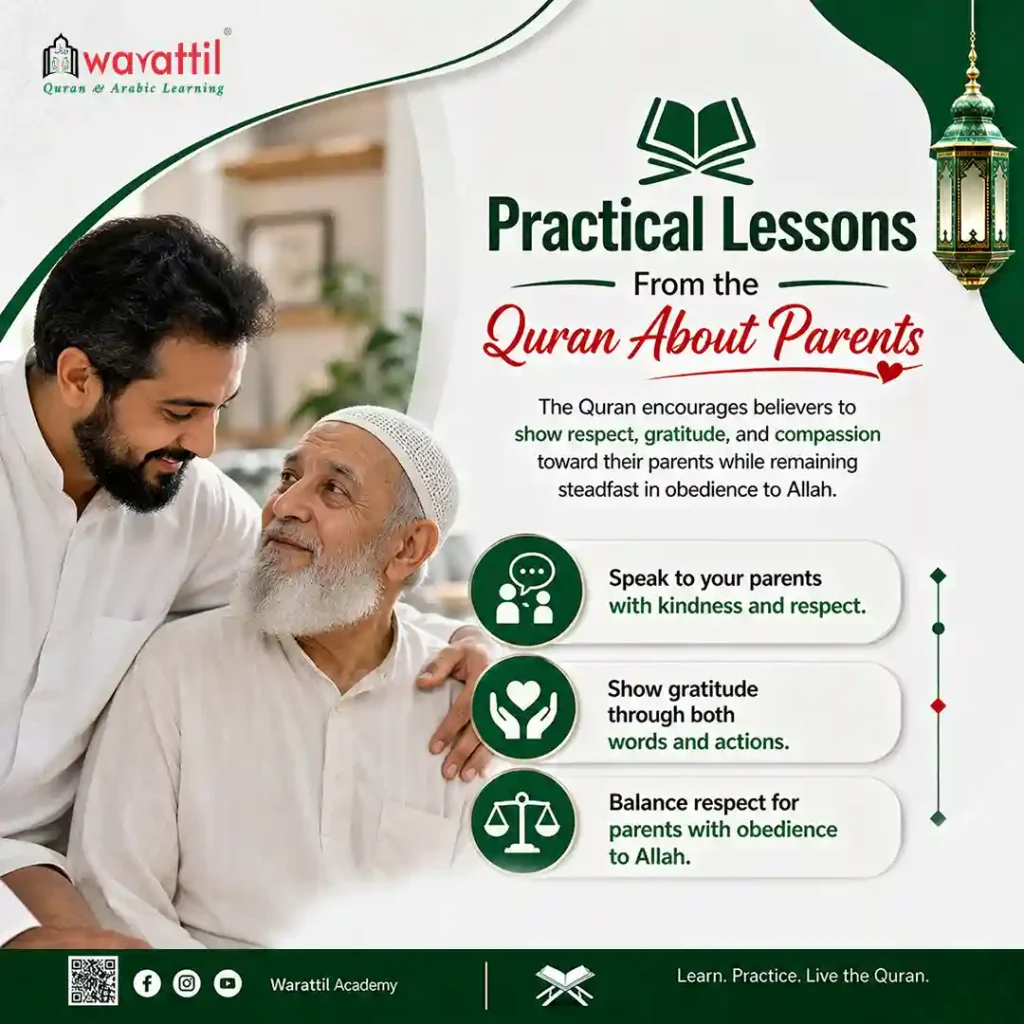
The ayat about parents in the Quran offer some of the clearest guidance on how people should treat their mothers and fathers. Across several chapters, the Quran connects kindness toward parents with gratitude, respectful speech, patience, compassion, and prayer. It also recognises the particular hardship experienced by mothers during pregnancy, childbirth, and early care.
One of the most striking features of these verses is their consistency. Respect for parents is not presented merely as a social custom. It forms part of a broader moral framework in which believers are encouraged to recognise the sacrifices made for them and respond with ihsan—goodness and excellent conduct.
At the same time, the Quran establishes an important balance. Parents deserve kindness and respectful treatment, but obedience to another human being does not take priority over obedience to Allah. Understanding this distinction is essential when studying what the Quran says about parents.
The Quran repeatedly commands good treatment of parents. This teaching appears in different contexts, including discussions of worship, gratitude, family responsibility, old age, and personal faith.Among the most significant passages are Surah Al-Isra 17:23–24, Surah Luqman 31:14–15, Surah Al-Ahqaf 46:15, Surah An-Nisa 4:36, and Surah Al-An’am 6:151.
Together, these ayat establish several important principles: parents should be treated with kindness, spoken to respectfully, cared for with compassion, and remembered in prayer. They also make clear that respect does not require a person to disobey Allah.
Surah Al-Isra contains perhaps the best-known Quranic guidance concerning parents. In verse 17:23, the command to worship Allah alone is immediately followed by the instruction to treat parents with excellence.
The verse pays particular attention to the time when parents reach old age. A person is instructed not to express irritation toward them or speak harshly. Instead, the Quran calls for respectful and honourable speech.
The following verse, 17:24, continues this teaching by encouraging humility born from mercy and teaching a prayer for one’s parents:
“My Lord! Be merciful to them as they raised me when I was young.”
This passage presents respect as more than financial assistance or physical care. The way a person speaks, responds, and behaves also matters.
For many families, this lesson becomes especially relevant as parents grow older. Age can bring greater dependence and changing needs. The Quranic instruction encourages patience and compassion precisely when caring for parents may require greater personal effort.
Another significant ayat about parents appears in Surah Luqman. Verse 31:14 commands people to honour their parents and draws particular attention to a mother’s hardship.
The verse describes how a mother carries her child through increasing weakness and mentions a two-year period of weaning. It then connects gratitude toward parents with gratitude toward Allah.
This connection carries an important lesson. Children do not simply appear in the world independently. Parents often invest years of physical effort, emotional care, time, and resources in raising them. The Quran encourages people to recognise this reality rather than taking parental sacrifice for granted.
The specific mention of a mother’s experience also highlights the physical burden associated with pregnancy and early motherhood. However, the broader command concerns good treatment of both parents.
The Quranic teaching on parents is balanced rather than unconditional. Immediately after commanding gratitude toward parents, Surah Luqman addresses a situation in which parents pressure their child toward shirk—associating partners with Allah.
The instruction is not to obey them in such a matter. Nevertheless, the verse still commands the person to maintain appropriate companionship with them in worldly life.
This distinction is important when understanding obedience to parents in Islam. Respecting parents does not mean that every request must be followed regardless of its moral or religious implications.
Therefore, the Quran establishes two principles at the same time: a believer must remain faithful to Allah, while continuing to behave toward parents with appropriate kindness and dignity.
Surah Al-Ahqaf 46:15 provides another powerful example of Quranic guidance about parents. It commands people to honour their parents and again draws attention to the hardship experienced by mothers during pregnancy and childbirth. The verse states that the combined period of pregnancy and weaning is thirty months.
The verse then describes a mature believer praying for the ability to remain grateful for Allah’s blessings upon both themselves and their parents. The prayer also asks for the ability to perform righteous deeds and for righteousness among one’s descendants.
This creates a meaningful connection between generations. A person remembers the care received from parents while also thinking about the character and well-being of the next generation.
The verse therefore presents gratitude not as a temporary feeling but as an attitude that can influence an entire family.
Surah An-Nisa 4:36 places good treatment of parents within a wider framework of social responsibility.
After commanding the worship of Allah without associating partners with Him, the verse instructs believers to show goodness toward parents. It then mentions relatives, orphans, people in need, neighbours, travellers, and others.
The placement of parents near the beginning of this broader list reflects the importance of family responsibility within Quranic ethics. A person’s moral conduct is not limited to acts of worship performed privately. It is also reflected in how that person treats the people closest to them.
This makes kindness to parents part of a much wider Islamic principle: faith should influence everyday relationships and behaviour.
Surah Al-An’am 6:151 is another important verse when exploring ayat about parents in Quran. Within a passage containing major moral instructions, the Quran commands good treatment of parents. Once again, the command concerning parents appears alongside the fundamental principle of worshipping Allah alone.
This repeated pattern is significant. In several Quranic passages, responsibility toward parents is mentioned in close connection with a person’s responsibility toward Allah. This does not place parents on the same level as the Creator. Rather, it demonstrates the seriousness with which the Quran treats a person’s obligations toward those who raised and cared for them.
A central concept in the Quran’s teaching about parents is ihsan. In this context, the term communicates the idea of treating parents with goodness and excellent conduct.
Ihsan can be reflected in ordinary behaviour. Speaking respectfully, listening patiently, offering appropriate help, checking on their needs, and avoiding unnecessary harshness can all reflect the broader Quranic principle of good treatment.
This is especially important because respect is sometimes understood only in terms of obedience. The Quran presents a broader picture. Speech matters. Gratitude matters. Compassion matters. The way someone behaves when parents become older also matters.
In other words, good treatment is not limited to major acts. It is often demonstrated through consistent everyday conduct.
The Quran itself points to one major reason: parents, particularly mothers, experience considerable hardship in raising children.
Surah Luqman mentions a mother’s increasing weakness during pregnancy, while Surah Al-Ahqaf refers to the hardships of pregnancy and childbirth. These references encourage people to remember sacrifices they may have been too young to recognise when those sacrifices were being made.
Parents may also spend years providing food, shelter, education, protection, guidance, and emotional support. Individual family circumstances naturally differ, but the Quran establishes a general principle of recognising parental care with gratitude and good conduct.
This emphasis also contributes to stronger family relationships. When gratitude, mercy, and respectful communication become part of family life, relationships have a stronger moral foundation.
The guidance in Surah Al-Isra is particularly relevant to elderly parents. The verse specifically addresses the possibility that one or both parents may reach old age while in a person’s care.
The instruction begins with something that may appear small: do not express contempt or irritation toward them. It then moves toward positive behaviour by commanding respectful speech.
This teaches an important principle about caring for ageing parents. Providing practical support while constantly speaking with frustration would not fully reflect the Quranic standard of compassionate treatment.
Where circumstances allow, care for elderly parents may involve giving time, helping with daily needs, maintaining regular communication, and protecting their dignity. The exact form of care will vary between families, but mercy and respectful conduct remain central Quranic principles.
The Quran also teaches believers to pray for their parents.
The well-known prayer in Surah Al-Isra 17:24 asks Allah to show mercy to one’s parents just as they cared for their child during childhood. Another Quranic prayer appears in Surah Ibrahim 14:41, where Prophet Ibrahim asks for forgiveness for himself, his parents, and the believers on the Day of Judgment.
These prayers demonstrate that a person’s relationship with parents includes a spiritual dimension. Gratitude can be expressed through actions and words, but remembering parents in sincere prayer is also part of the Quranic tradition.
The verses about parents provide guidance that can be applied in everyday life without reducing the subject to a simple checklist.A person can begin by paying attention to communication. Speaking calmly and respectfully is particularly important when disagreements arise. Gratitude can also be expressed directly instead of remaining unspoken. As parents grow older, their needs may change, making patience and practical support increasingly important.
At the same time, the Quran does not teach blind obedience. Surah Luqman establishes that a person should not obey parents in matters that contradict faith in Allah, while still maintaining appropriate kindness in worldly relationships.
The broader lesson is balance: remain principled without becoming unnecessarily harsh, and maintain respect without abandoning religious responsibility.
One of the most important points to understand is that honouring parents and obeying every request are not identical concepts.
The Quran strongly commands kindness, gratitude, and respectful companionship. Yet Surah Luqman 31:15 demonstrates that obedience has limits when a parent’s demand conflicts with a person’s fundamental duty to Allah.
This distinction prevents two misunderstandings. First, a person should not use ordinary disagreements as an excuse for disrespectful behaviour. Second, parental authority should not be interpreted as absolute authority over every religious or moral decision.
The Quranic approach combines firm principles with compassionate behaviour.
When the major Quran verses about parents are considered together, a consistent message emerges. Parents should be treated with dignity throughout life, and particular patience should be shown when they become elderly.
The Quran encourages gratitude for parental sacrifice, recognises the hardships experienced by mothers, teaches respectful communication, and encourages believers to pray for their parents. At the same time, it makes clear that obedience to parents does not override obedience to Allah.
These teachings transform respect for parents from a cultural expectation into a conscious moral responsibility.
The ayat about parents in Quran present a thoughtful and balanced framework for family relationships. They call for kindness without promoting unconditional obedience, encourage gratitude without reducing it to words, and place particular emphasis on patience when parents reach old age.
Surah Al-Isra teaches respectful speech and mercy. Surah Luqman connects gratitude toward parents with gratitude toward Allah while defining the limits of obedience. Surah Al-Ahqaf recognises the hardship of motherhood and encourages gratitude across generations. Other passages reinforce good treatment of parents as part of a broader commitment to righteous conduct.
For anyone seeking to understand the Quranic view of parents, the central message is clear: treat them with ihsan, recognise their sacrifices, communicate with dignity, care for them with compassion, and remember them in prayer.
Surah Al-Isra 17:23–24 is among the most frequently referenced passages about parents. It commands good treatment, respectful speech, mercy, and prayer for parents, particularly when they reach old age.
Several verses address this principle. Important examples include Surah Al-Isra 17:23, Surah Luqman 31:14, Surah Al-Ahqaf 46:15, Surah An-Nisa 4:36, and Surah Al-An’am 6:151.
The Quran specifically recognises the hardship experienced by mothers during pregnancy, childbirth, and nursing. Surah Luqman 31:14 and Surah Al-Ahqaf 46:15 are particularly important passages on this subject.
No. Surah Luqman 31:15 establishes a limit to obedience when parents call a person toward associating partners with Allah. However, the verse still instructs the person to maintain appropriate companionship with them in worldly life.
Surah Al-Isra 17:24 teaches a prayer asking Allah to have mercy upon one’s parents as they cared for the person during childhood. The Quran also contains other prayers mentioning parents, including Surah Ibrahim 14:41.
Surah Al-Isra 17:23–24 emphasises patience, respectful speech, humility, and mercy toward parents in old age. The passage specifically warns against expressions of irritation and encourages compassionate treatment.
The Quran repeatedly commands good treatment of parents and, in several passages, places this responsibility immediately after the command to worship Allah alone. It also reminds readers of the sacrifices involved in pregnancy, childbirth, and raising children.

My son feels happy, amazing teachers and staff in wrattil and flexible prices MashaAllah Thank you so much
My daughter started learning in warattil academy and alhamdulilah we are really impressed and have enjoyed learning with wrattil. May Allah reward her sheikh
My teacher Ahmed is very good. He helped me recite and memorize holy Quran
Warattil is the most efficient way of learning Arabic. I like warattil curriculum and excellent teachers to support this learning Thank you so much
I highly recommend warattil Ijazah programs to anyone who wants to learn Quran properly.
Very well organized MashaAllah. I love it and this is a great course if you want to understand the Quran and learn tafsir
Warattil program is the best I have seen. The teacher is really great and is available to answer questions in a clear manner
I think warattil is the best academy in learning Arabic and I recommend Arabic course to anyone
We are so happy with ustad Hussein. He is very patient and comfortable teacher. May Allah the teachers and admin in warattil
Rating 10 mashaAllah and so grateful