Shopping cart
- +1 564-544-6614
- [email protected]
- 24/7 Available


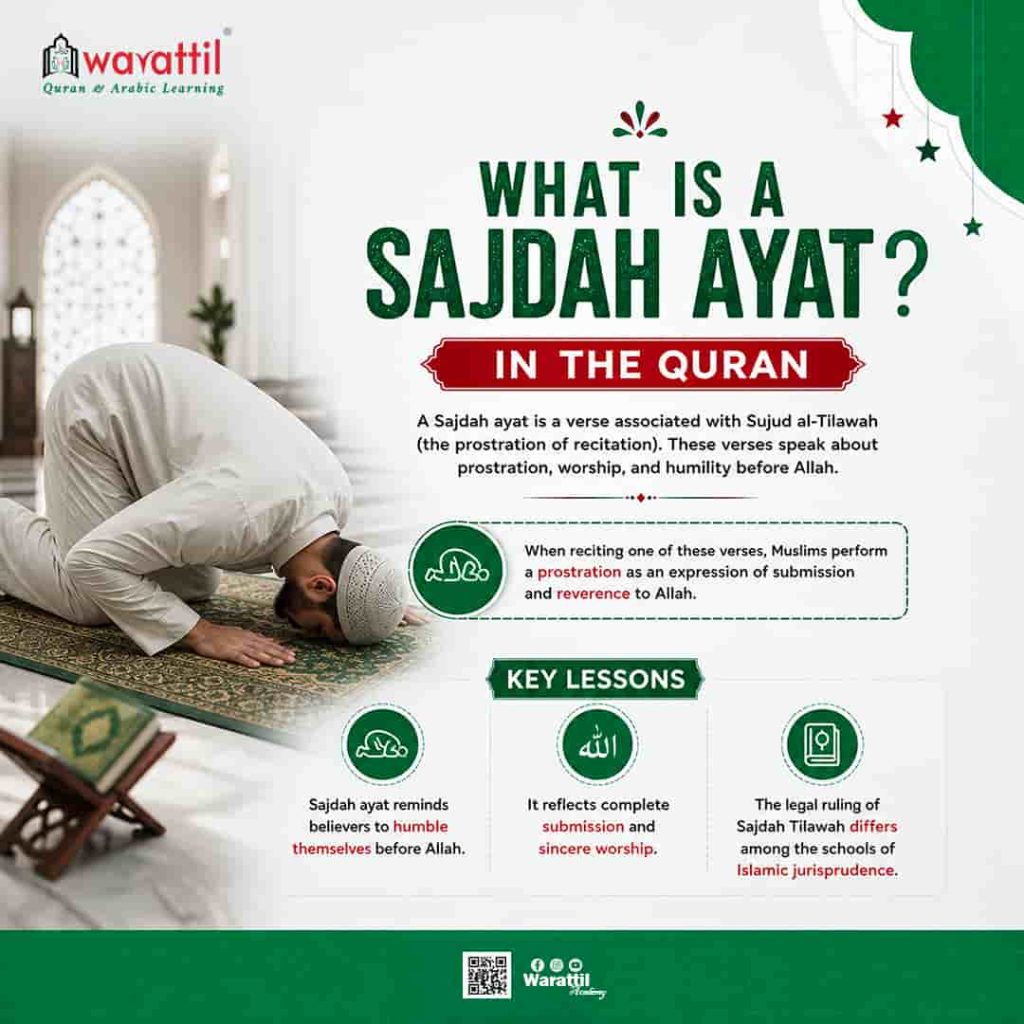
The 14 Sajdah Ayat in Quran are specific verses associated with Sajdah Tilawah, or the prostration of recitation. When Muslims reach these places while reading or listening to the Quran, a prostration may be performed according to the rulings of their school of Islamic jurisprudence.
Many printed copies of the Quran identify these locations with a special Sajdah symbol, making them easier for readers to recognise. However, anyone researching the number of Sajdah verses may notice that some sources mention 14 while others mention 15. This is not necessarily a mistake. There is a recognised difference of scholarly opinion regarding how the places of prostration are counted.
According to the Hanafi school, there are 14 recognised Sajdah Tilawah locations. Other scholarly traditions may count 15, particularly because of differences concerning the second prostration associated with Surah Al-Hajj.
This guide focuses on the commonly referenced 14 Sajdah Ayat in Quran according to the Hanafi school, while also explaining the scholarly difference so readers can understand the subject accurately.

A Sajdah ayat is a verse connected with Sujud al-Tilawah or Sajdah Tilawah, meaning the prostration of recitation. These verses generally speak about prostration, worship, humility before Allah, or the response of believers and creation to His signs.
When one of these verses is recited, the act of prostration represents submission and humility before Allah.
The concept is deeply connected with the broader Quranic message of worship. Human beings are reminded that Allah alone deserves worship and that true faith should produce humility rather than arrogance.
The exact legal ruling and method of Sajdah Tilawah can differ between Islamic schools of jurisprudence. For example, the Hanafi school considers Sajdah Tilawah necessary (wajib) in circumstances where its relevant conditions are fulfilled, while scholars from other schools may classify it differently.
The answer depends on the scholarly method being followed.
According to the Hanafi school, there are 14 places of Sajdah Tilawah in the Quran. Other scholars count 15 places of prostration.
One important reason for this difference concerns Surah Al-Hajj. The Surah contains two locations that some scholars recognise as places of prostration. In the Hanafi count of 14, the second location in Surah Al-Hajj is not counted as a Sajdah Tilawah verse.
Therefore, saying that the Quran has either 14 or 15 places of prostration can reflect a recognised difference in Islamic jurisprudence rather than a contradiction in the Quran itself.
For this article, the list follows the 14 Sajdah locations commonly recognised in Hanafi jurisprudence.
The 14 Sajdah Tilawah locations are found across different chapters of the Quran. They begin in Surah Al-A’raf and continue through to Surah Al-‘Alaq near the end of the Quran.
The first of the commonly listed 14 Sajdah Ayat in Quran appears at the end of Surah Al-A’raf.
Arabic:
إِنَّ ٱلَّذِينَ عِندَ رَبِّكَ لَا يَسْتَكْبِرُونَ عَنْ عِبَادَتِهِۦ وَيُسَبِّحُونَهُۥ وَلَهُۥ يَسْجُدُونَ
Reference: Surah Al-A’raf, 7:206
The verse describes those who are near Allah as not being too proud to worship Him. They glorify Him and prostrate before Him.
The message establishes an important theme that appears throughout the Sajdah verses: true worship requires humility. Pride can prevent a person from submitting, whereas sincere faith encourages recognition of Allah’s greatness.
Arabic:
وَلِلَّهِ يَسْجُدُ مَن فِى ٱلسَّمَـٰوَٰتِ وَٱلْأَرْضِ طَوْعًۭا وَكَرْهًۭا وَظِلَـٰلُهُم بِٱلْغُدُوِّ وَٱلْـَٔاصَالِ
Reference: Surah Ar-Ra’d, 13:15
This verse presents a powerful picture of creation’s submission to Allah. It states that whoever is in the heavens and the earth prostrates to Allah, willingly or unwillingly, along with their shadows.
The ayah reminds the reader that everything ultimately exists under Allah’s authority. Human beings are therefore invited to recognise that reality consciously and willingly through sincere worship.
The next Sajdah location appears in Surah An-Nahl.
Arabic:
يَخَافُونَ رَبَّهُم مِّن فَوْقِهِمْ وَيَفْعَلُونَ مَا يُؤْمَرُونَ
Reference: Surah An-Nahl, 16:50
This verse forms part of a passage describing creatures and angels in humble submission before Allah. The preceding verse specifically mentions their prostration, while verse 50 describes their reverence for their Lord and obedience to His commands.
It reminds believers that obedience and humility are closely connected. Recognition of Allah’s authority should influence both worship and behaviour.
Arabic:
وَيَخِرُّونَ لِلْأَذْقَانِ يَبْكُونَ وَيَزِيدُهُمْ خُشُوعًۭا
Reference: Surah Al-Isra, 17:109
This ayah describes people falling down in submission as the Quran increases their humility.
The surrounding passage speaks about those who possess knowledge and recognise the truth of Allah’s revelation. Their response is not arrogance or indifference. Instead, revelation deepens their khushu’, or humble reverence.
The verse teaches that meaningful engagement with the Quran should affect more than the intellect. Its guidance should also cultivate humility in the heart.
Arabic:
إِذَا تُتْلَىٰ عَلَيْهِمْ ءَايَـٰتُ ٱلرَّحْمَـٰنِ خَرُّوا۟ سُجَّدًۭا وَبُكِيًّۭا
Reference: Surah Maryam, 19:58
This beautiful passage comes after mentioning a number of prophets and righteous people who received Allah’s favour and guidance.
When the revelations of the Most Compassionate were recited to them, their response was one of prostration and deep emotion.
The verse presents worship as a sincere response to recognising divine guidance. It also shows how revelation affected some of the most righteous people mentioned in the Quran.
Arabic:
أَلَمْ تَرَ أَنَّ ٱللَّهَ يَسْجُدُ لَهُۥ مَن فِى ٱلسَّمَـٰوَٰتِ وَمَن فِى ٱلْأَرْضِ وَٱلشَّمْسُ وَٱلْقَمَرُ وَٱلنُّجُومُ وَٱلْجِبَالُ وَٱلشَّجَرُ وَٱلدَّوَآبُّ وَكَثِيرٌۭ مِّنَ ٱلنَّاسِ
Reference: Surah Al-Hajj, 22:18
This verse describes an extraordinary range of creation in relation to prostration before Allah. It mentions those in the heavens and on earth, as well as the sun, moon, stars, mountains, trees, living creatures, and many human beings.
The verse gives the reader a broader perspective on worship. Humanity exists within a creation that remains completely subject to its Creator.
Surah Al-Hajj is also central to the scholarly discussion about the total number of Sajdah locations because some schools recognise another place of prostration later in the Surah.
Arabic:
وَإِذَا قِيلَ لَهُمُ ٱسْجُدُوا۟ لِلرَّحْمَـٰنِ قَالُوا۟ وَمَا ٱلرَّحْمَـٰنُ أَنَسْجُدُ لِمَا تَأْمُرُنَا وَزَادَهُمْ نُفُورًۭا
Reference: Surah Al-Furqan, 25:60
This verse describes a very different response to the command to prostrate. Instead of submitting, the people mentioned in the passage respond with rejection.
The contrast is significant. Throughout the Quran, prostration represents humility and recognition of Allah’s authority. Refusing to submit, by contrast, can reflect pride and resistance to guidance.
The Sajdah associated with this verse provides a practical contrast to the attitude described within it.
Arabic:
ٱللَّهُ لَآ إِلَـٰهَ إِلَّا هُوَ رَبُّ ٱلْعَرْشِ ٱلْعَظِيمِ
Reference: Surah An-Naml, 27:26
This ayah declares that there is no deity worthy of worship except Allah, the Lord of the Mighty Throne.
Its context is particularly important. The preceding verses describe people who were found worshipping the sun rather than Allah. The passage redirects attention towards the Creator, who brings hidden things to light and knows what people conceal and reveal.
The Sajdah location therefore reinforces one of Islam’s central teachings: worship belongs to Allah alone.
Arabic:
إِنَّمَا يُؤْمِنُ بِـَٔايَـٰتِنَا ٱلَّذِينَ إِذَا ذُكِّرُوا۟ بِهَا خَرُّوا۟ سُجَّدًۭا وَسَبَّحُوا۟ بِحَمْدِ رَبِّهِمْ وَهُمْ لَا يَسْتَكْبِرُونَ
Reference: Surah As-Sajdah, 32:15
This is perhaps one of the clearest Quranic descriptions of how sincere believers respond to Allah’s signs.
The verse describes them falling in prostration, glorifying their Lord, and refusing to behave arrogantly.
Once again, the relationship between prostration and humility becomes clear. Sajdah physically places a person in a position of submission, while the verse highlights the spiritual attitude that should accompany that action.
Arabic:
وَظَنَّ دَاوُۥدُ أَنَّمَا فَتَنَّـٰهُ فَٱسْتَغْفَرَ رَبَّهُۥ وَخَرَّ رَاكِعًۭا وَأَنَابَ
Reference: Surah Sad, 38:24
This verse appears within the account of Prophet Dawud. It describes him seeking forgiveness from his Lord, falling down in devotion, and turning back to Allah.
Surah Sad is another location where juristic discussions exist regarding the precise classification and nature of the prostration. Readers following a particular school of Islamic jurisprudence should therefore refer to reliable scholarship from that tradition when studying the detailed rulings.
The wider lesson of the passage remains powerful: recognising an error should lead a believer towards repentance and a sincere return to Allah.
Arabic:
فَإِنِ ٱسْتَكْبَرُوا۟ فَٱلَّذِينَ عِندَ رَبِّكَ يُسَبِّحُونَ لَهُۥ بِٱلَّيْلِ وَٱلنَّهَارِ وَهُمْ لَا يَسْـَٔمُونَ
Reference: Surah Fussilat, 41:38
The surrounding passage commands people not to prostrate to the sun or moon but to prostrate to Allah, who created them.
Verse 38 then explains that even if some people act arrogantly, those who are near Allah continue glorifying Him night and day without becoming weary.
This passage connects Sajdah directly with Tawhid, the worship of Allah alone. Created things may demonstrate Allah’s power, but worship belongs only to their Creator.
Arabic:
فَٱسْجُدُوا۟ لِلَّهِ وَٱعْبُدُوا۟
Reference: Surah An-Najm, 53:62
The final verse of Surah An-Najm contains a direct command:
“So prostrate to Allah and worship Him.”
The message is brief but powerful. After the Surah presents its warnings and signs, it concludes by directing people towards the appropriate response: worship and submission to Allah.
This is one of the most direct Sajdah verses in the Quran.
Arabic:
وَإِذَا قُرِئَ عَلَيْهِمُ ٱلْقُرْءَانُ لَا يَسْجُدُونَ
Reference: Surah Al-Inshiqaq, 84:21
This verse asks why certain people do not prostrate when the Quran is recited to them.
The passage addresses rejection of divine revelation and reminds readers that the Quran should not be approached with arrogance.
For believers, the Sajdah associated with the verse becomes an expression of the opposite response: humility, recognition, and submission before Allah.
The final verse in the commonly recognised list of the 14 Sajdah Ayat in Quran appears at the end of Surah Al-‘Alaq.
Arabic:
كَلَّا لَا تُطِعْهُ وَٱسْجُدْ وَٱقْتَرِب
Reference: Surah Al-‘Alaq, 96:19
The Surah concludes with a powerful command to prostrate and draw near.
This creates a meaningful connection between Sajdah and closeness to Allah. The act of prostration represents humility, obedience, and devotion.
It is also a fitting conclusion to the list of Sajdah Tilawah verses. The first revelation begins with the command to read, while this Surah concludes with a command to prostrate and draw near.
People researching the 14 Sajdah Ayat in Quran may become confused when they encounter lists containing 15 locations.
The difference comes from recognised scholarly interpretations rather than from different versions of the Quran.
One major point of difference concerns Surah Al-Hajj 22:77, which includes a command to bow and prostrate. Some scholars count this as an additional place of Sajdah Tilawah, resulting in a total of 15.
According to the Hanafi school, however, the commonly followed count is 14, with the second location in Surah Al-Hajj not included as a Sajdah Tilawah verse.
There are also differences among schools regarding certain other locations and their legal classification. Therefore, Muslims should follow reliable scholarship within the school of jurisprudence they trust rather than treating legitimate scholarly differences as contradictions.
Sajdah Tilawah literally refers to the prostration connected with Quran recitation. It is performed when a designated verse of prostration is recited or, under applicable conditions, heard.
The act consists of a single prostration rather than a complete unit of prayer.
Its legal status and some details of its performance vary among the recognised schools of Islamic jurisprudence. In Hanafi jurisprudence, Sajdah Tilawah is regarded as wajib when the relevant conditions apply.
Other schools may describe its ruling differently. For this reason, questions concerning whether Sajdah is required in a specific situation should be answered according to the relevant school of Islamic law.
According to the commonly taught Hanafi method outside Salah, a person performs one prostration. The person says Allahu Akbar, goes into Sajdah, and then rises with Allahu Akbar. There is no Tashahhud or concluding Salam for this individual prostration.
The details differ when the verse is recited during Salah, and rulings concerning purification and other conditions can also vary between schools.
Because these are matters of Islamic jurisprudence, anyone uncertain about a particular situation should consult a qualified scholar who can provide guidance according to the school they follow.
Although knowing the locations of the Sajdah verses is useful, understanding their message gives the subject greater depth.
A clear theme runs through many of these passages: humility before Allah.
Some verses describe angels and creation prostrating before their Creator. Others describe believers responding to revelation with humility. Several passages contrast sincere submission with arrogance and rejection.
Sajdah therefore carries a meaning beyond physical movement. It represents the believer’s recognition that Allah is greater than human pride, status, possessions, and personal desires.
The 14 Sajdah locations also remind Muslims that reading the Quran should be an active experience. The Quran is not merely a text to pronounce. Its words invite reflection and, in these particular places, may call for a physical response of submission according to the applicable Islamic ruling.
Most printed Mushafs use a special symbol to indicate a place of Sajdah. The exact design may vary depending on the publisher and regional printing tradition.
Readers may see a Sajdah sign near the relevant verse or in the margin of the page. Digital Quran applications may also identify these locations.
However, because different scholarly traditions may mark 14 or 15 locations, readers should not be surprised if the markings differ slightly between editions.
Understanding the scholarly background helps prevent unnecessary confusion.
Both numbers appear in Islamic scholarship because scholars differ regarding the counting and classification of certain places of prostration. The Hanafi school commonly recognises 14 Sajdah Tilawah locations, while other scholars count 15.
Sajdah Tilawah means the prostration of recitation. It is a prostration connected with reciting or hearing designated verses of the Quran, subject to the rulings and conditions recognised by the relevant school of Islamic jurisprudence.
In Quranic order, the first commonly recognised Sajdah Tilawah location appears in Surah Al-A’raf, verse 206.
The last Sajdah location in Quranic order is found in Surah Al-‘Alaq, verse 19: “Prostrate and draw near.”
Some scholars recognise two places of prostration in Surah Al-Hajj, at verses 18 and 77. The Hanafi school does not count the second location as a Sajdah Tilawah verse, which is one reason the Hanafi total is commonly given as 14 rather than 15.
Both involve physical prostration, but Sajdah Tilawah has a specific purpose and its own legal rulings. Outside Salah, it is performed as a single prostration rather than as part of a complete Rak’ah.
Learning the 14 Sajdah Ayat in Quran helps readers recognise important moments of prostration while reciting the words of Allah. According to the Hanafi count followed in this article, these Sajdah locations begin with Surah Al-A’raf 7:206 and conclude with Surah Al-‘Alaq 96:19.
At the same time, accuracy requires acknowledging the recognised scholarly disagreement. Some Islamic scholars count 15 places of prostration, particularly by including a second location in Surah Al-Hajj.
Beyond the question of numbers, the Sajdah verses share a profound spiritual message. They repeatedly draw attention to worship, humility, obedience, and submission before Allah. Some describe the natural world prostrating before its Creator, while others contrast the humility of believers with the arrogance of those who reject divine guidance.
Understanding these verses in context can make Quran recitation more meaningful. Rather than simply noticing a symbol on the page, the reader can reflect on why prostration appears at that particular moment and what the surrounding verses teach about faith and submission.
For detailed rulings about when Sajdah Tilawah becomes necessary and exactly how it should be performed, readers should follow reliable scholarship according to their recognised school of Islamic jurisprudence.

My son feels happy, amazing teachers and staff in wrattil and flexible prices MashaAllah Thank you so much
My daughter started learning in warattil academy and alhamdulilah we are really impressed and have enjoyed learning with wrattil. May Allah reward her sheikh
My teacher Ahmed is very good. He helped me recite and memorize holy Quran
Warattil is the most efficient way of learning Arabic. I like warattil curriculum and excellent teachers to support this learning Thank you so much
I highly recommend warattil Ijazah programs to anyone who wants to learn Quran properly.
Very well organized MashaAllah. I love it and this is a great course if you want to understand the Quran and learn tafsir
Warattil program is the best I have seen. The teacher is really great and is available to answer questions in a clear manner
I think warattil is the best academy in learning Arabic and I recommend Arabic course to anyone
We are so happy with ustad Hussein. He is very patient and comfortable teacher. May Allah the teachers and admin in warattil
Rating 10 mashaAllah and so grateful