Shopping cart
- +1 564-544-6614
- [email protected]
- 24/7 Available


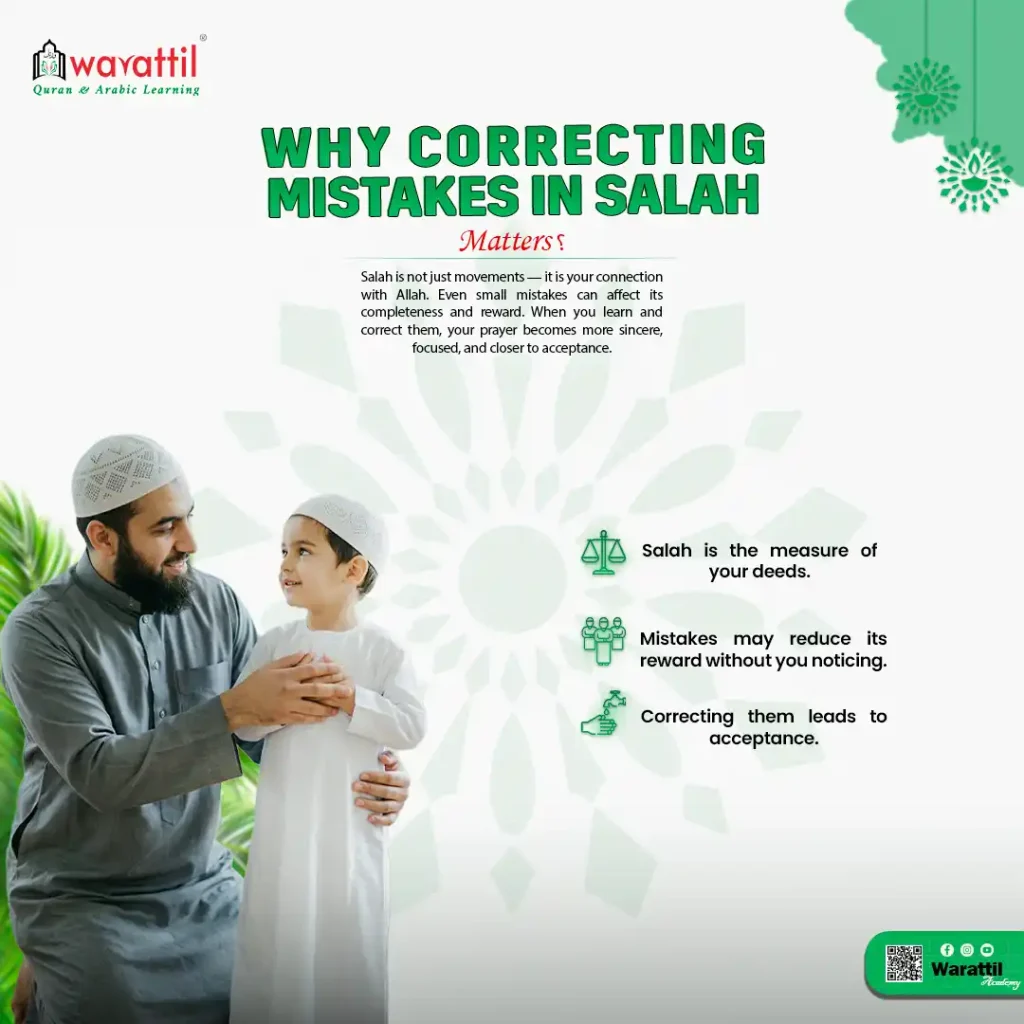
Salah is the second pillar of Islam and one of the most important acts of worship a Muslim performs every single day. Yet, despite praying five times a day, many Muslims unknowingly fall into common mistakes in Salah that affect both the validity and the spiritual depth of their prayer. These errors are not always obvious; some are rooted in habit, some in incomplete learning, and others in simple carelessness that builds up over time. The good news is that once they are identified, they can be corrected with a little knowledge and consistent effort. In this detailed guide, we will walk through the most frequently observed mistakes in Salah, explain why they matter, and show you how to fix them step by step.
Before diving into the specific errors, it is worth understanding why this topic deserves serious attention. The Prophet Muhammad ﷺ said:
“The first matter that the slave will be brought to account for on the Day of Judgment is the prayer. If it is sound, then the rest of his deeds will be sound. And if it is incomplete, then the rest of his deeds will be incomplete.” (At-Tabarani — graded as Hasan)
This hadith makes it clear that Salah is not merely a routine obligation. It is the foundation of a Muslim’s entire relationship with Allah. When common errors go uncorrected, the prayer may become incomplete in the sight of Allah and that is something no sincere believer would want. In below we will discuss some of the common mistakes occurred during salah
One of the most widespread mistakes in Salah is performing it without khushu’ that inner humility, focus, and awareness of standing before Allah. Many people rush through the prayer with their minds wandering to their to-do lists, conversations, or daily worries.
Allah says in the Quran: “Successful indeed are the believers — those who are humble in their prayers.” (Surah Al-Mu’minun: 1–2)
Khushu’ is not just recommended. It is an essential quality that distinguishes a meaningful prayer from an empty ritual. The body may be in sujood, but if the heart is elsewhere, the spiritual benefit is greatly diminished.
How to improve it: Learn the meanings of what you recite in Salah. Understand each supplication, and before every prayer, take a conscious moment to remind yourself that you are about to stand before the Creator of the universe.
It might seem like a basic point, but incorrect or incomplete wudu is among the most consequential mistakes in Salah. If any obligatory part of wudu is missed such as not washing the entire face, neglecting the elbows, or wiping less than a quarter of the head then the wudu is invalid, and consequently, the prayer itself is not accepted.
Common wudu mistakes include rushing through the washing without covering all required areas, not washing between the fingers and toes, or using so little water that the skin barely gets wet.
How to correct it: Learn the obligatory (fard) acts of wudu from a reliable source and perform each step with deliberate care. It takes less than two minutes when done properly.

During Salah in congregation (jama’ah), straightening and closing the rows is a Sunnah that is heavily emphasised. The Prophet ﷺ said: “Straighten your rows, for the straightening of rows is part of establishing the prayer.” (Bukhari and Muslim)
Yet, in many masajid today, gaps are left between worshippers, or people stand at uneven distances. Feet and shoulders should be aligned.
How to correct it: Move close enough that your shoulder is in line with your neighbour’s shoulder and your foot aligns with theirs without causing discomfort.
Surah Al-Fatihah is recited in every single rak’ah of every prayer. It is a pillar (rukn) of Salah meaning the prayer is invalid without it. Common errors include mispronouncing letters such as the “dad” (ض), reciting too quickly without tajweed, or skipping it in later rak’ahs under a mistaken belief.
The Prophet ﷺ clearly stated: “There is no prayer for the one who does not recite the Opening Chapter of the Book.” (Bukhari and Muslim)
How to correct it: Invest time in learning basic tajweed rules. Even a short course focused specifically on Al-Fatihah will make a meaningful difference.
Itmi’nan — tranquility and stillness in each posture is an obligatory element of Salah according to the majority of scholars. The Prophet ﷺ told a man who was rushing through his prayer, “Go back and pray, for you have not prayed.” (Bukhari and Muslim) — and this was repeated three times.
How to correct it: After going into ruku’, ensure your back is flat and your hands rest firmly on your knees. Pause. Rise, pause again in standing. Then go into sujood calmly. Every movement deserves its own moment of stillness.
Many people let their arms hang loosely by their sides during the standing position, a posture not supported by any major school of thought. The recognised positions include placing the right hand over the left on the chest (supported by many contemporary scholars), below the navel (Hanafi), or between the chest and navel.
How to correct it: Follow your school of thought consistently and with knowledge. Avoid the completely dropped-arm posture, as it has no basis in established fiqh.
The Takbiratul Ihram is the opening pillar of Salah without it, the prayer simply does not begin. Many people say it while still in motion, such as while bending to place their prayer mat, which is incorrect. It must be said while standing upright.
How to correct it: Stand fully upright, raise both hands to shoulder or ear level, and say “Allahu Akbar” clearly and with full intention before beginning any movement.
Some people join congregational prayer after it has started and forget to complete the remaining rak’ahs after the imam says salaam. This is the obligation of the masbooq (latecomer) — every missed rak’ah must be made up.
How to correct it: Keep track of how many rak’ahs you have completed while following the imam. After his salaam, stand up and complete the remaining rak’ahs on your own, as if you had never missed them.
The Sunnah is to direct your gaze toward the place of sujood throughout the prayer except during tashahhud. Looking upward, sideways, or at others around you goes against this Sunnah and pulls the mind away from worship.
How to correct it: Train yourself to keep your eyes lowered and focused on where your forehead will meet the ground. This simple habit significantly supports khushu’.
Speaking even a single word of worldly conversation invalidates the Salah according to scholarly consensus. The Prophet ﷺ said: “Verily, this prayer is not befitting for any speech of the people. It consists only of tasbeeh, takbir, and recitation of the Quran.” (Muslim)
How to correct it: Silence your phone before every prayer. If something urgent demands a response, a light hand gesture is permissible. Verbal speech, however, breaks the prayer outright.
Each pillar of Salah must follow its established order (tartib). Performing sujood before ruku’, or standing before fully completing a posture, disrupts the prayer’s structure.
How to correct it: If you make an unintentional sequence error, perform sujood as-sahw (the prostration of forgetfulness) at the end of the prayer to compensate for it.
Every obligatory prayer has a specific time window. Praying before the time begins — or after it has ended without a valid excuse — is a clear violation. Allah says: “Indeed, prayer has been decreed upon the believers a decree of specified times.” (Surah An-Nisa: 103)
How to correct it: Use a reliable prayer time app or your local mosque schedule. If a prayer is missed unintentionally due to sleep or forgetfulness, make it up immediately upon remembering.
Ghusl is obligatory after sexual relations, a wet dream (janabah), menstruation, and postpartum bleeding. Performing Salah while in a state of major ritual impurity (hadath akbar) invalidates the prayer entirely regardless of how well the prayer is otherwise performed.
How to correct it: Learn the situations that obligate ghusl. When in doubt, it is always safer to bathe before praying.
Correcting the common mistakes in Salah is not about chasing perfection for its own sake it is about sincerity, respect, and genuine love for Allah. Every Muslim has room to grow in their prayer, and the very fact that you are reading this shows that you care about getting it right. That intention, in itself, is deeply valuable.
Start with one or two corrections at a time. As each one becomes natural, move on to the next. Seek knowledge from qualified scholars and trusted Islamic resources. Attend a local halaqah if one is available to you.
The Prophet ﷺ prayed with such care, beauty, and presence that his companions described it in vivid detail across generations. That is our standard not just ticking a box five times a day, but truly standing before Allah with the heart, body, and mind united in worship.
May Allah accept our prayers, forgive our shortcomings, and guide us to pray as His Prophet ﷺ prayed. Ameen.

My son feels happy, amazing teachers and staff in wrattil and flexible prices MashaAllah Thank you so much
My daughter started learning in warattil academy and alhamdulilah we are really impressed and have enjoyed learning with wrattil. May Allah reward her sheikh
My teacher Ahmed is very good. He helped me recite and memorize holy Quran
Warattil is the most efficient way of learning Arabic. I like warattil curriculum and excellent teachers to support this learning Thank you so much
I highly recommend warattil Ijazah programs to anyone who wants to learn Quran properly.
Very well organized MashaAllah. I love it and this is a great course if you want to understand the Quran and learn tafsir
Warattil program is the best I have seen. The teacher is really great and is available to answer questions in a clear manner
I think warattil is the best academy in learning Arabic and I recommend Arabic course to anyone
We are so happy with ustad Hussein. He is very patient and comfortable teacher. May Allah the teachers and admin in warattil
Rating 10 mashaAllah and so grateful